



On a beautiful fall day with a bright blue sky, an occasional breeze and low humidity – the kind of day that makes you grateful to be alive – I met Delvin Johnson, the Alabama-Coushatta Tribe of Texas’ tribal historic preservation officer, at the Welcome Center, just as he and Kerwin Williams, the docent at the Welcome Center were concluding a tour for some Native American firefighters from Arizona.
I’d just come from meeting Deanna Maldonado, the tribe’s elder chairperson, at the multipurpose center where 11 ladies of the tribe were participating in a pottery class taught by Amanda Atwood of Handmade Studio of Livingston. Each lady was given a one-pound block of Longhorn white clay and taught how to make a peach pot out of it with walls about a half-inch thick. “It’s not perfect all the way around, that’s the beauty of it,” Atwood said, as she gave instructions to the ladies.
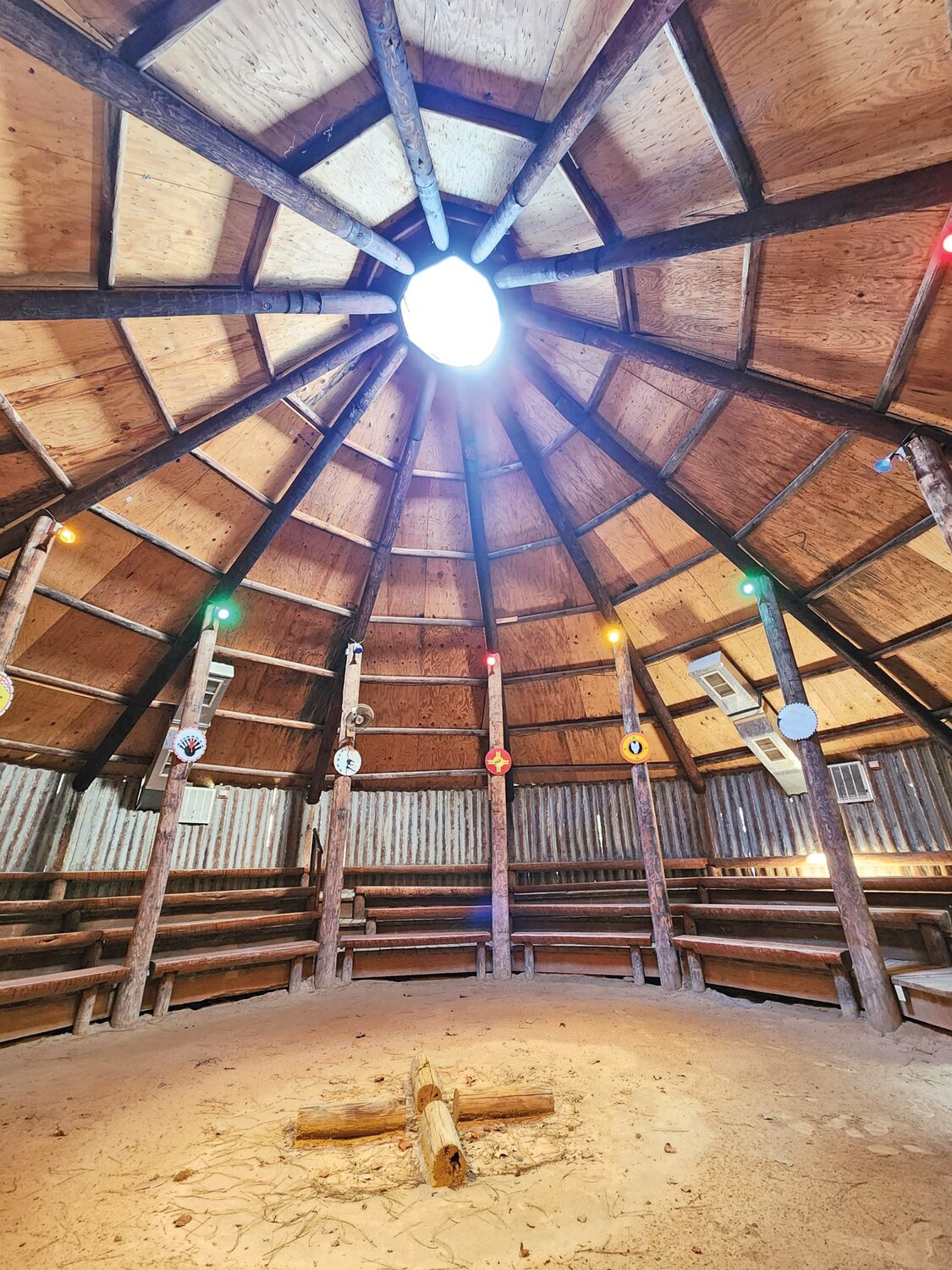
Walking alongside Johnson, we met up with Second Chief Herbert Johnson Jr. who led us into a circular-shaped, symbolic building called Council House that was used as a meeting place many years ago. “Mikko would talk to delegates regarding ceremony, hunting, requests from neighbor tribes and politics,” the tribal historic preservation officer said, adding that it was for men only at that time. Mikko means chief or leader and is a term with significant cultural importance. It was a special and very reverent experience in which I could sense the spirits of people who’d met there many generations prior.
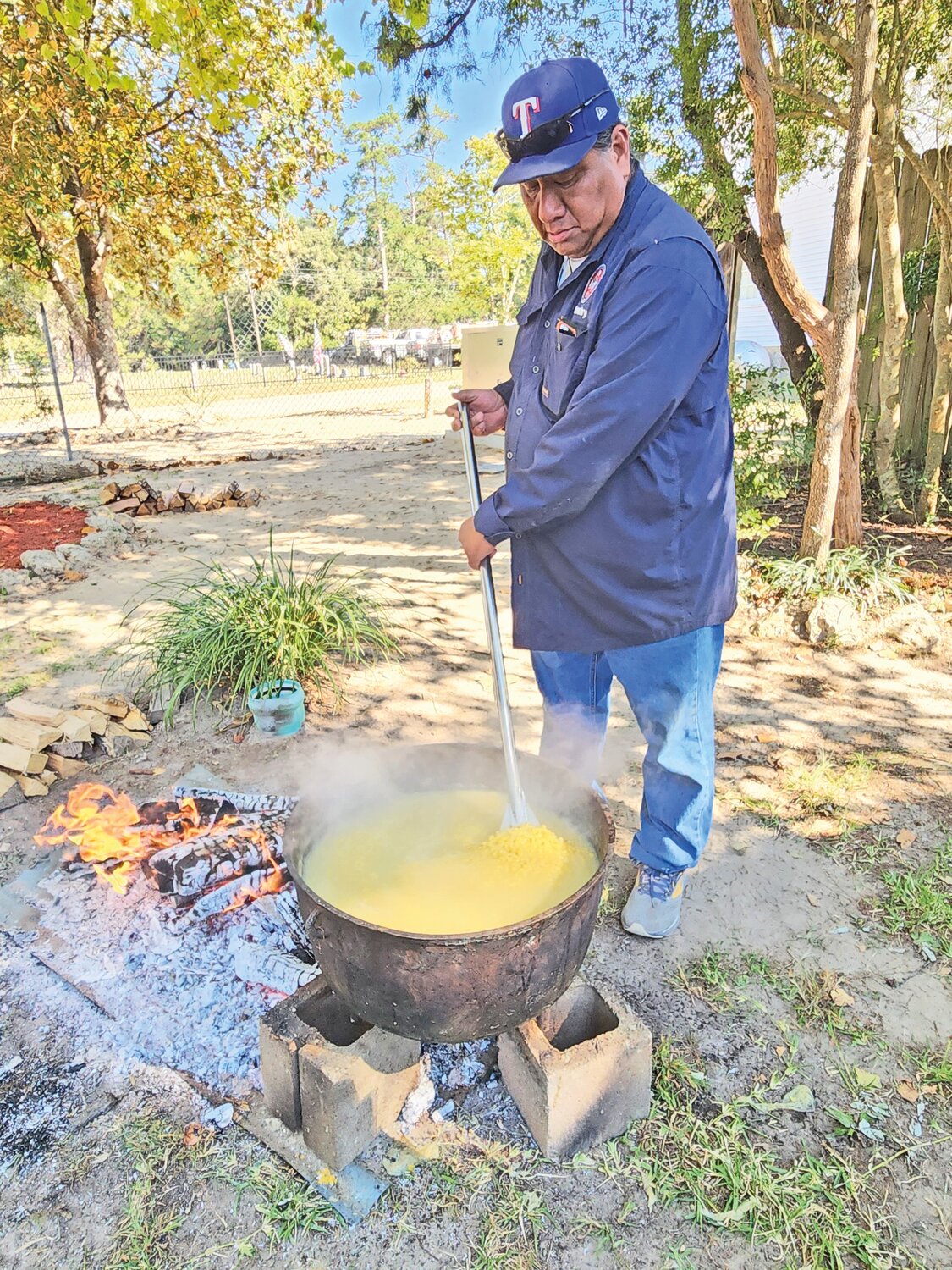
Walking back outside, we sat around a fire, taking turns stirring a large cauldron of ‘sofkey,’ the Muskogean word for corn soup. According to Johnson it’s a traditional corn porridge that cooks from early morning to midday, roughly from 7 a.m. to around 2 p.m.
“Everything in how it’s made comes from nature – corn, water, white ash and fire,” Johnson said.
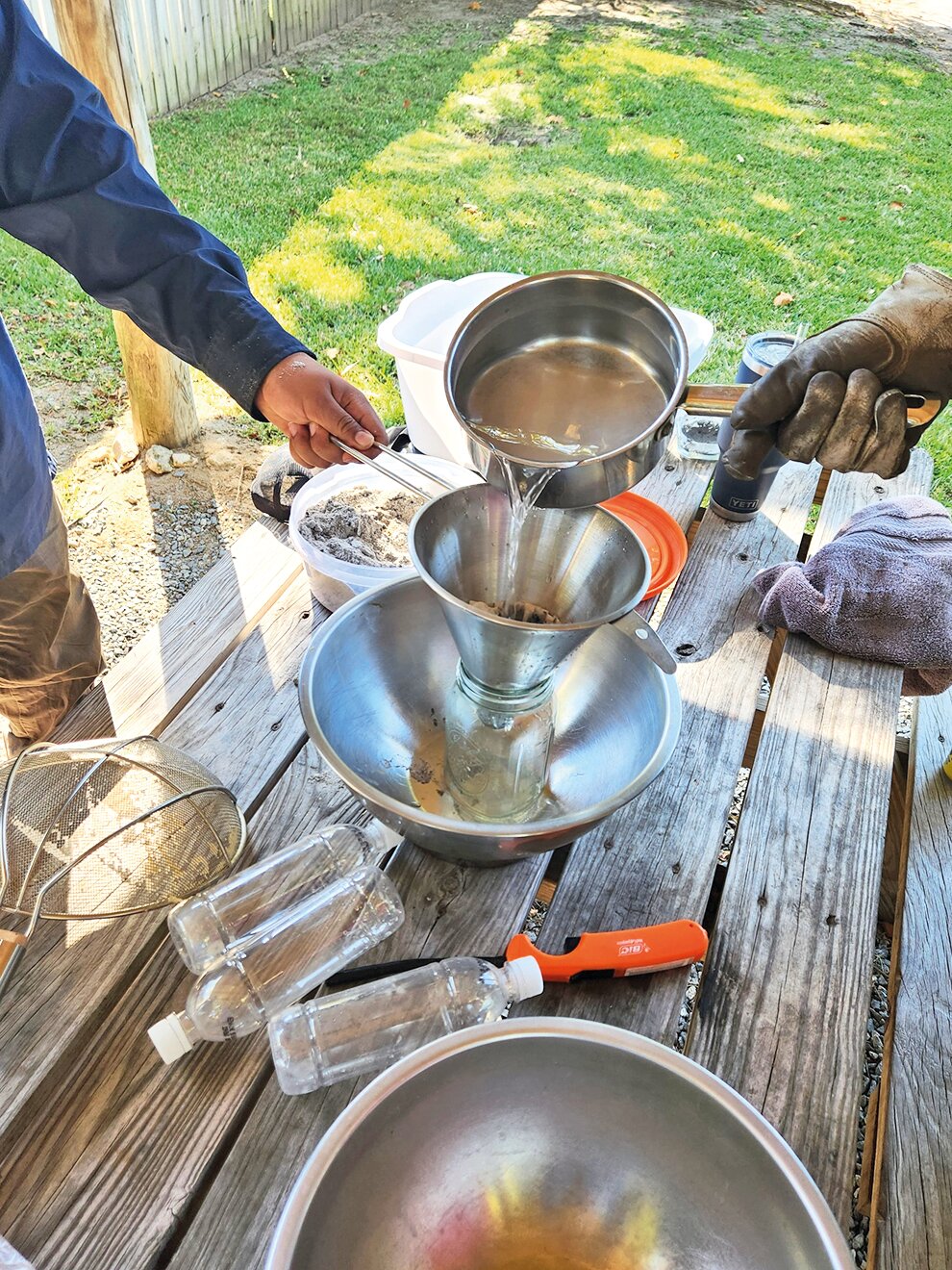
As it cooks down, a delicate process ensues. Tribal members use a sauce pan to scoop out the sofkey which is then gently poured through a metal funnel with a coffee filter in the bottom of it to filter out the impurities before being poured back into the large cauldron. It’s a slow-going process that takes the better part of a day, both rudimentary and methodical at the same time.
Several tribal elders sat around, watching and visiting. Youth and others milled about, walking by occasionally to visit or check the progress of the sofkey. I visited with Principal Chief Donnis B. Battise and Tribal Councilmember Nita Battise. We exchanged pleasantries and shared a few stories and laughs.
“Our people at one time followed the traditional fire laws and would extinguish the fire and build a new one to start the new year. This was called a ‘Green Corn Ceremony,’” Johnson said, referring to indigenous fire traditions, or the practice of cultural burning to manage the land.
The Green Corn Ceremony was an annual ceremony practiced among various Native American peoples to celebrate the ripening corn harvest, mark a new year, and renew life through a period of purification, thanksgiving and community reconciliation.
On this particular Wednesday, the tribe was midway through “Ayiksa Tooka,” the name of its annual Celebration Week. “Ayiksa Tooka” is a phrase that means ‘celebration’ or ‘festival’ and refers to the week-long event that includes various activities and competitions for tribal members of all ages, such as games, contests and cultural events.
Young and old alike honor and celebrate the tribe’s unique heritage and traditions with numerous activities and lots of playful competition among the tribe’s 12 clans. The week kicked off with Kids Day at the ballpark. Festivities included a kids clan parade and scavenger hunt, volleyball, cornhole, relay races and tug of war, a pickle eating contest and a pie eating contest. Other activities included frybread dough making and a frybread contest, a gospel singing, canoe races, kayak races and a lip sync contest.
The culmination of the week was the Celebration Week tribal dinner, followed by the State of the Nation Address given by Tribal Council Chairwoman Cecilia Flores.
“It is my distinct honor, privilege and duty to report to you, the citizens of the Alabama-Coushatta Tribe of Texas, the state of the tribe remains strong, resilient, and continues to progress in all areas such as housing, education, infrastructure, positive economic impact, building a strong workforce, cultural and language preservation, and remaining steadfast as a sovereign nation,” Flores said.
“I want to first acknowledge our ancestors who have made a permanent home for us here on this sacred ground, due to their perseverance, determination and belief in God, Creator above. Alabama-Coushatta Celebration Week must include our elders who have gone before us but leave their legacy which we enjoy today.”
The tribal chairwoman emphasized the importance of the tribe’s progress during the past year in various areas, including cultural and language preservation, economically, workforce, education, healthcare, tribal housing and public safety.
“We are one tribe with a rich history with our sister tribes – the Coushatta of Louisiana, Alabama-Quassarte in Oklahoma and the Muskogee Creek nation of Oklahoma. Historically, we lived amongst each other and today we welcome our relatives from the north and east. Our shared history leads us to this day,” Flores said.
On that beautiful fall Wednesday, Johnson walked me over to an area where a granite monument and Texas Historic Marker stood side by side. Dated Aug. 3, 1937, the granite monument is inscribed: “Presented To Alabama Coushatta Indians In Recognition Of Their Services To The Confederacy By Robert E. Lee Chapter UDC No 186 Houston Texas.” The Texas Historic Marker tells of the Confederate Service of the Alabama and Coushatta Indians of Polk County.
He told me the monument and marker are in the exact location in which a giant oak tree formerly stood and it was under that giant oak tree that Sam Houston – a friend of the Alabamas and Coushattas – would meet with tribal leaders. It was in 1836 that Houston brokered a treaty with the tribes before the Texas War of Independence from Mexico. The agreement provided the title of land between the Neches and Sabine rivers for one community with both tribes in return for assurance the tribes would not side with Mexico. Tribal members served as guides for Houston’s army and provided provisions to feed Texas refugees fleeing from Santa Anna’s army. Today, Houston’s descendants still acknowledge that contribution to the Republic of Texas.
I felt a little lighter as I left the reservation that day, spiritually uplifted you could say. I suppose it could have been the slower pace and spending time in nature. More than that though, I think it was the joy I derived and knowledge I received from spending the day learning from my tribal friends. n


