

With San Jacinto County now in House District 10, and with current District 10 Rep. Michael McCaul opting for retirement, voters are faced with a host of candidates seeking to represent the county in Washington, D.C.
Three candidates have filed for the March primary election seeking the Democrat nomination for the November general election; early voting began Tuesday and continues through Feb. 27.
Polk County Publishing sought answers from all candidates; however, only one responded to inquiries. Other information was gained from campaign websites.

I bring servant leadership, strategic problem-solving, and policy expertise grounded in real-world results. As a Military Intelligence officer in the Army, I led teams by listening first, building trust, and holding people accountable to clear objectives.
Professionally, I’ve worked at the intersection of policy and implementation, building bipartisan coalitions, navigating diverse stakeholder environments, and advancing solutions on issues ranging from energy security and deficit reduction. I understand how policy is developed, negotiated, and executed, and I’m pragmatic about what it takes to move ideas from concept to law to measurable impact.
In the private sector, I’ve managed communications and marketing strategies that translate complicated issues into clear, actionable priorities. Across every role, I focus on practical solutions, disciplined execution, and delivering measurable results, and I’ll bring that same focus to Washington to deliver for the people of CD10 and for working families like mine.
In my conversations across the district, I hear two things over and over: the economy and healthcare. Families are working hard, but they feel like they’re falling behind. The cost of housing, childcare, groceries, and healthcare keeps rising, while wages don’t keep pace. For too many Texans, the foundation of a stable, prosperous life feels out of reach.
But this isn’t just about rising costs; it’s about a system that feels rigged. Economic inequality is growing because the rules in Washington aren’t working for working people, and those rules are too often shaped by special interests, performative politicians, and executive overreach instead of transparent, accountable lawmaking focused on real solutions.
We need policies that expand opportunity: lowering everyday costs, strengthening access to affordable healthcare, supporting work with fair wages, and restoring integrity to how laws are written and passed. Government should help people get ahead, not hold them back.
Rural communities aren’t a monolith, and in CD10, the district was drawn to protect one party’s power, not to represent shared interests. The result is a mix of rural, suburban, and urban communities with different day-to-day realities. But everywhere I go, I hear the same core concerns: affordability, healthcare, public schools, infrastructure. The details may vary, but the underlying policy imperatives are shared and require steady, accountable governance.
Balancing those priorities means listening first and making accessibility a cornerstone of my work. I won’t assume I know what’s best for any part of the district; instead, I’ll engage directly with constituents through in-person and virtual town halls, district office hours in every region, and advisory councils that reflect CD10’s full diversity. Transparency will also be central: plain-language explanations of my votes, regular progress updates, and dashboards showing how our work translates into real outcomes.
I’ll also use my committee and subcommittee assignments strategically to ensure that rural, suburban, and urban priorities are represented in legislation and funding decisions. My goal is consistent, accountable representation so no community is overlooked and every constituent has a real voice in Washington.
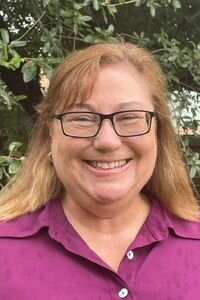
(Information from campaign website)
Dawn Marshall knows the meaning of hard work because she’s lived it every step of the way. One of five children, she got her first job at just 15 and never looked back. From working the assembly line and ringing up groceries as a cashier to serving as a pharmacy tech, salesperson, and even volunteering as an EMT, Dawn has always rolled up her sleeves to get the job done.
Determined to build a better future, she put herself through college — becoming the first in her family to earn a degree. Her journey didn’t stop there. She worked as an archaeologist, volunteered in underfunded schools, and earned both a Master’s and Ph.D.
As a college professor, Dawn returned to the kind of institution that changed her life: a local community college. There, she dedicated herself to helping students from working-class backgrounds find their footing and achieve their goals—just like she did.
Dawn Marshall’s story isn’t just inspiring — it’s proof that when determination meets opportunity, anything is possible.
Issues
In Central Texas, the challenges are real — from skyrocketing housing costs and rural hospital closures to unfair redistricting and threats to vital research funding at our universities. Dawn Marshall is running to fight for what matters here at home. That means protecting and expanding access to affordable healthcare, including Medicare and Medicaid, so families and seniors aren’t forced to choose between prescriptions and groceries. It means tackling the housing crisis head-on, so working Texans aren’t priced out of the communities they help build. Dawn will stand against gerrymandering that dilutes our voices and work to restore fair representation for all. She’ll champion research funding that drives innovation and jobs in our region, not cuts that set us back. In Congress, Dawn will be a relentless advocate for a fairer, healthier, and more affordable future for every family in Texas’ 10th District.

I bring training in economics and veterinary medicine, plus 22 years in medical operations and administration across small businesses, mid-sized firms, large corporations, and now a university setting in College Station. That range taught me how different systems respond to incentives, budgets, staffing, and regulation — and how to deliver reliable outcomes in each environment.
The biggest problem is affordability — why basic needs keep getting more expensive faster than paychecks.
A big reason is that too much power is concentrated in a few giant companies. In many industries, Wall Street backed firms control the whole chain — money, production, storage, shipping, and retail. That lets them set the rules, charge extra fees like a “toll,” and push out smaller local businesses.
When real competition is weakened, we get higher prices, fewer choices, and fewer new local businesses. One example people are talking about is Pepsi and Walmart. According to reporting on FTC’s complaint, Pepsi tracked other stores’ prices and then adjusted deals to protect Walmart’s advantage, leaving smaller retailers paying more and struggling to compete.
You can see this pattern in groceries, healthcare, housing, energy, and broadband: more consolidation and weak enforcement lead to higher costs.
In Texas, the biggest pressure points are housing costs, reliable water and electricity, and healthcare that people can afford. These basics decide whether communities can grow without families getting priced out.
I will balance TX-10 by treating it as one integrated economic system — Austin’s jobs and tax base, the suburbs’ housing and commuting networks, and rural land, water, and production all depend on each other. The smartest way to serve everyone is to invest in the shared inputs that raise productivity and lower costs across the whole district.
That’s why I will restore our public bank to offer low-cost, long-term loans at the same rates the U.S. Treasury pays, so we can build the basics every community needs: housing, energy, water systems, roads, broadband, and local clinics. Cities need more housing and better transit to cut costs and congestion. Suburbs need strong infrastructure to handle growth and keep commutes moving. Rural communities need affordable financing for broadband, utilities, and farm and small business needs. As those loans are repaid, the bank earns interest and returns dividends back to the Treasury — helping lower the national debt while strengthening the district’s real economy.
To keep constituents apprised, I’ll hold monthly People’s Hearings on-line with open mics and recorded Q&A. My office will run like a business: doors open, no appointments — first come, first served. I’ll post bills and votes in plain English online, engage two-way on social media, and I’ll work nights, weekends, and 16-hour days to answer you.


